
Prevent Costly Re-Spins
Identify signal integrity and power delivery issues before manufacturing to reduce redesign cycles, delays, and unnecessary prototype costs
SI/PI SIMULATION

As digital signal frequencies on PCBs continue to rise, bit rates on fast serial interfaces are now at or above 20 Gbps per lane, with some standards reaching 40, 64, 100, or 112 Gbps-class lane rates. (e.g., Thunderbolt 5, USB4). At this speed, high-speed digital interface design transitions into RF design. This is where signal integrity analysis and SI/PI simulation tools become essential, providing the foundation for accurate and predictive SI/PI analysis throughout the design lifecycle.
Identify signal integrity and power delivery issues before manufacturing to reduce redesign cycles, delays, and unnecessary prototype costs
Validate impedance, crosstalk, timing, and PDN performance with advanced SI/PI simulations tailored for demanding high-speed interfaces
Work directly with experienced engineers to solve complex SI/PI challenges faster and move confidently toward production
The primary goal of signal integrity (SI) work is to ensure a clean signal reaches the receiving circuit in electronics. The signal can suffer distortion from non-ideal sections on the transmission line or from coupled noise. Signal integrity efforts aim to minimize these effects through thoughtful electronics design and thorough SI/PI analysis.
Reliable signaling within or between electronic boards ensures the absence of bit errors, reducing the need for data resending or error correction. This results in several key benefits:
Faster computing and data processing.
Lower maintenance costs and longer battery life.
Enhanced customer satisfaction and system reliability.
A common method to assess signal quality at the receiving circuit is using a signal eye diagram. If the signal eye is not sufficiently open, errors may occur at reception. A blurry signal eye necessitates heavy error correction and increased software self-awareness for data corruption.
Key design considerations for achieving optimal signal integrity include:
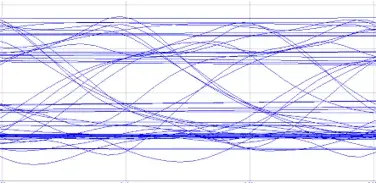

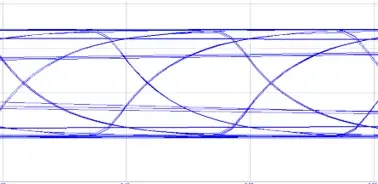
Signal integrity analysis estimates and evaluates the signal shape and quality at the receiving circuit. Methods such as signal eye diagram measurements ensure that signal levels and rise/fall times are adequate. However, measurement isn’t always feasible when traces are hidden under components or within inner layers. In such cases, signal integrity simulation tools and SI/PI analysis techniques are the only viable options.
A drawback of this after-layout approach is that results come after the design is complete. To address this, the work is divided into pre-layout and post-layout phases. In the pre-layout phase, critical signal path details are analyzed and design guidelines are created. The post-layout phase involves analyzing the completed design.

We use a comprehensive SI/PI simulation tool suite that combines signal and power integrity features, enabling early design validation and layout optimization, and utilize advanced 3D EM signal integrity simulation tools to optimize critical portions of high-speed lane routing, including vias, components, and connector areas.
Simulations provide data on routing impedances and S-parameter models, revealing the transmission path’s frequency response. These models allow for the tuning of equalization where applicable. We also conduct lower frequency (< 5GHz) analyses to adjust driver strengths and terminations, which are often necessary for fast clock signals and memory interfaces (e.g., SC cards, DRAMs).
Power integrity analysis assesses the power delivery network (PDN) performance for both AC and DC. DC analysis ensures adequate power delivery without significant voltage drops or high current densities, enhancing reliability. AC impedance analysis of the PDN verifies that it meets the specifications for high-performance ICs. This process ensures effective power delivery at higher frequencies, improving EMI levels in processor subsystems. To ensure these results, we utilize advanced SI/PI simulation tools that evaluate both DC and AC behavior across the power delivery network and support complete SI/PI analysis from early-stage planning to post-layout validation.
By incorporating signal integrity simulation and power integrity analysis into your design process, you can ensure high performance and reliability in your high-speed digital designs by leveraging a robust SI/PI simulation tool at both pre- and post-layout stages.





Our engineers can analyze your design and identify potential issues before they become costly hardware revisions.
End-to-end wireless hardware design expertise for reliable, high-performance electronic products.