Antenna Measurements
Verify, tune, and benchmark antenna performance with precise OTA and conducted measurements
Technologies
Bluetooth antenna design is critical for devices operating within the 2.4GHz frequency band, commonly used for transferring audio and data. While many applications share a Wi-Fi antenna with Bluetooth, a dedicated Bluetooth antenna design can significantly enhance performance, especially for devices using low-power Bluetooth (BLE). BLE benefits from superior antenna performance, which can extend battery life – a crucial factor in many applications.
With the advent of Bluetooth 5, features like mesh networking and long-range capabilities have been introduced. While mesh networking does not directly impact antenna design, the improved sensitivity and higher transmit power required for extended range do influence antenna requirements. As with IoT devices, maximizing range and optimizing antenna performance is essential for the full realization of Bluetooth 5’s capabilities.
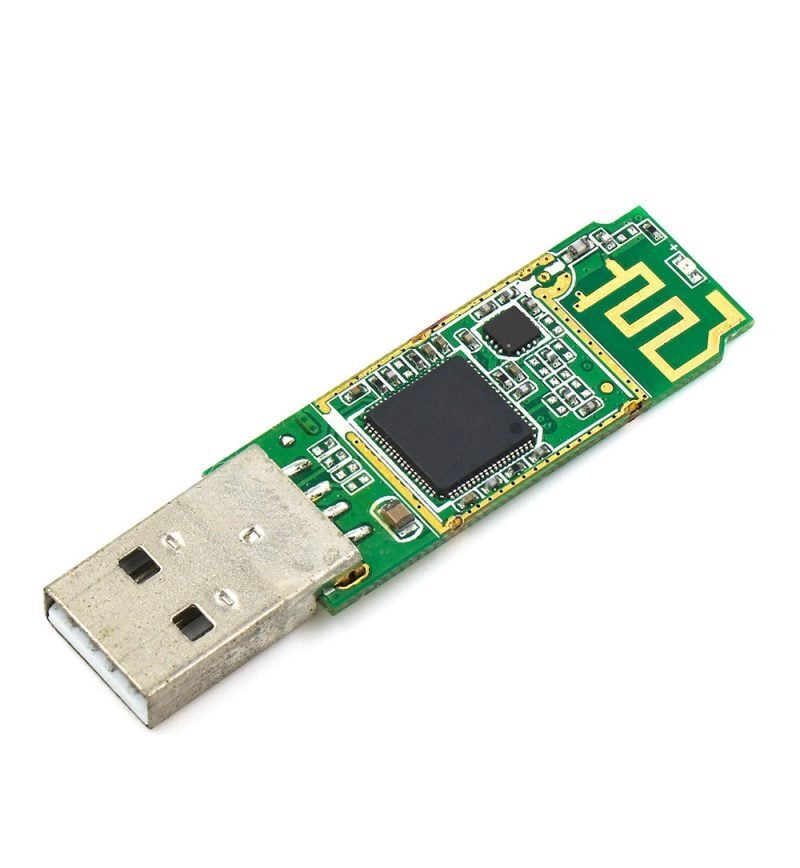
Bluetooth devices are often highly cost-sensitive, making Bluetooth PCB antenna design an ideal solution. PCB trace antennas are cost-efficient, reducing the Bill of Materials (BOM) to a minimum, while still providing the necessary performance for Bluetooth connectivity. This cost-effective approach is especially valuable for consumer electronics where price competitiveness is essential.
Bluetooth antenna performance must remain consistent not only in prototypes, but also in mass production. Radientum supports customers throughout the entire development cycle, helping ensure manufacturability, component availability, and reliable RF performance in real-world products.
Our expertise covers PCB antennas, chip antennas, and compact multi-radio designs, along with production validation, OTA measurements, and antenna tuning to minimize risks before volume manufacturing begins.
Radientum provides specialized Bluetooth antenna design and Bluetooth PCB antenna design services, covering the entire product development process from feasibility studies and design stages to consultancy during mass production. Our antenna simulations are essential for achieving accurate performance forecasts in the early development stages, enabling well-informed decisions before prototype manufacturing. Through simulation, we leverage our extensive expertise in product integration to discover innovative antenna solutions tailored to your needs.
We offer TRP measurements in our anechoic chamber, where your device is configured to transmit a carrier wave signal (CWS) at maximum power. Our power meter assesses the transmitted power in all directions, integrating the results to calculate the total radiated power.
We support companies developing Bluetooth and BLE-enabled devices where wireless performance is critical to product success. Our customers range from startups building their first connected product to global companies optimizing high-volume designs.
We work with teams building sensors, trackers, and connected devices that rely on stable BLE connectivity, long battery life, and compact form factors.
From wearables to smart home devices, we help ensure reliable Bluetooth performance in products where size, aesthetics, and user interaction impact antenna behavior.
We support industrial IoT applications where robust Bluetooth connectivity is required in challenging environments with metal enclosures, interference, or long-range requirements.
We assist in designing Bluetooth antennas for medical devices where reliability, compliance, and consistent performance are critical.
We collaborate with hardware teams, design houses, and OEMs to solve antenna challenges early, reducing redesign cycles and accelerating time to market.
Reference project
Discover how Radientum developed a custom FPC antenna for Converge's concrete sensor, enhancing wireless communication and performance in the construction industry.
Bluetooth antenna design is the process of creating and optimizing an antenna for reliable wireless communication in the 2.4 GHz ISM band used by Bluetooth and Bluetooth Low Energy (BLE). It involves balancing size, efficiency, range, and integration constraints such as PCB layout, enclosure materials, and nearby components.
Not always. BLE devices can use:
A dedicated antenna is typically recommended when:
Key factors include:
Even small design changes can significantly impact range and efficiency.
The optimal choice depends on device size, cost targets, and performance requirements.
Yes, since both operate at 2.4 GHz. However, proper RF design is required:
Poor implementation can lead to reduced efficiency and interference issues.
Performance is typically evaluated using:
Testing is often done in anechoic chambers using OTA (over-the-air) measurement setups.
When the antenna is placed inside the final product:
This is why antenna design must consider the full device, not just the PCB in isolation.
These issues often require simulation, prototyping, and iterative tuning.
You should consider expert support when:
Early involvement reduces redesign costs and speeds up development.
Typical timelines vary depending on complexity:
Early planning and clear requirements can significantly shorten the process.