
Custom Antenna Design
Tailored antennas maximizing performance, overcoming constraints, reducing BOM, and improving reliability.
Antennas for sensing
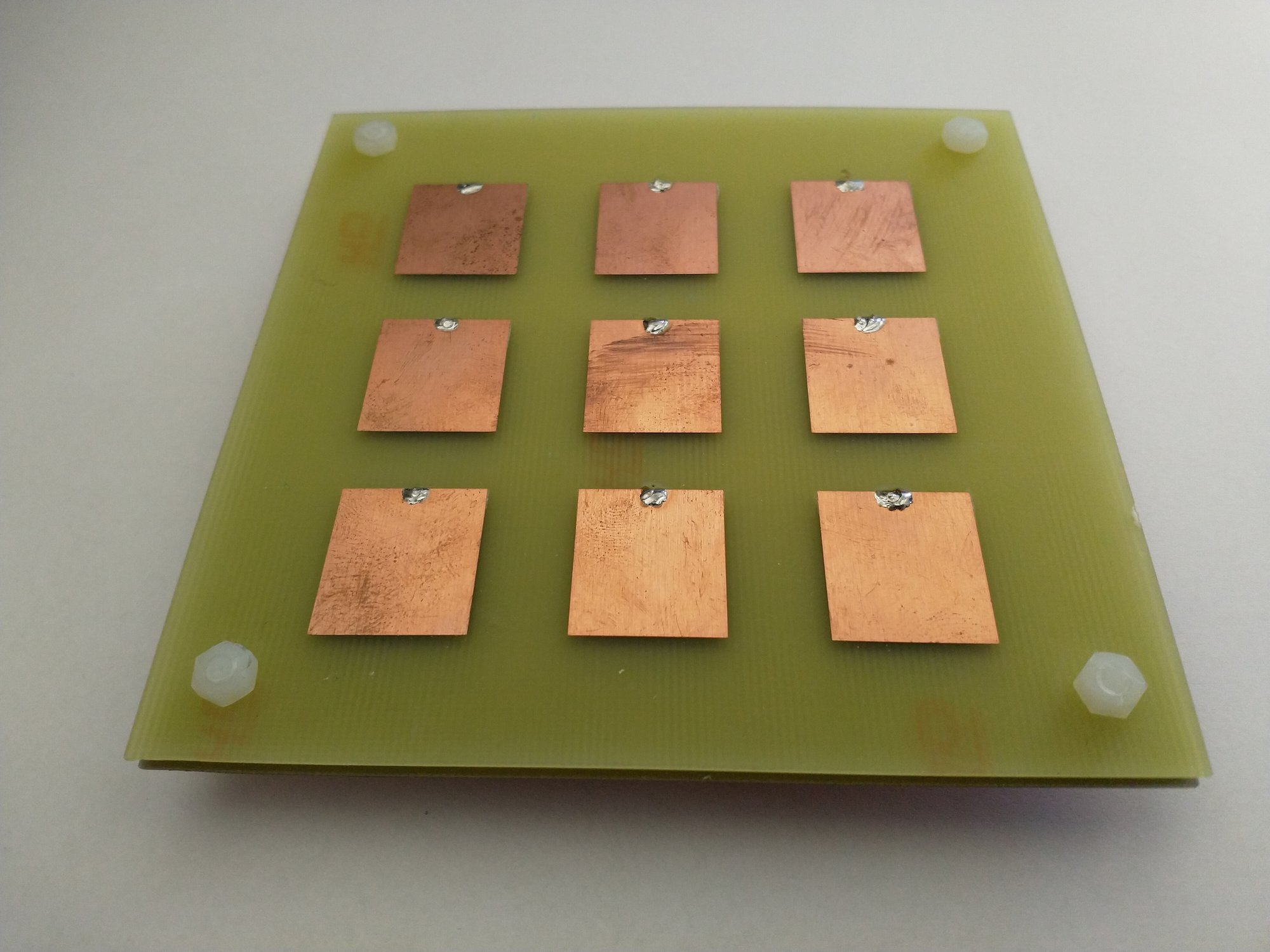
Radar sensors, from a radar antenna design perspective, are distinct due to their use of higher frequencies compared to communication systems. For instance, an IoT sensor equipped with a radar antenna to detect its surroundings might operate at 24GHz or 60GHz, while its communication antenna functions at lower frequencies, typically below 6GHz. The higher frequencies utilized in radar antenna design enhance resolution, and as a result, radar sensors often incorporate antenna arrays to boost antenna gain and performance.
In radar systems, the radar antenna is typically integrated with Radar MMIC modules that support radar antenna arrays, which are usually implemented on PCBs. These modules generally offer 2-4 channels for both transmission (Tx) and reception (Rx), with independent amplitude and phase control. This setup facilitates beam steering and MIMO radar functionalities without needing additional phase shifters. However, due to the limited number of channels, the radar antenna design usually allows electrical steering in only one plane. For applications requiring more advanced steering, multiple MMIC modules can be cascaded, or the radar antenna design can be enhanced with phase shifters, amplifiers, or beamformers.
Common radar antenna frequencies include: 24GHz used for long-range detection, 60GHz used for shorter range but more accurate sensing and 77GHz used for accurate automotive radars
Additionally, 6.5 to 8GHz UWB radars are effective for short-distance sensing through obstacles. However, these lower frequency radar antennas require a larger physical area to achieve the same performance as mmWave radar antennas, often limiting their ability to have narrow beamwidths. Nonetheless, their penetration capabilities are unmatched.
Given the high frequencies involved in radar antenna design, precise antenna simulations become crucial. Due to the miniature size of radar antenna structures, hand modifications are impractical, making prototypes essential only for validating designs achieved through simulations. Testing mmWave radar antennas differs significantly from testing embedded communication antennas, which you can explore further on our antenna measurements page.
Radientum is your premier R&D partner for customized radar antenna design and RF integration. We specialize in designing cost-effective and high-performance microstrip, waveguide, and lens radar antennas. With our expertise, your radar antenna products can reach the market faster, at a lower cost, and with enhanced performance. Contact us to learn more!
You have a vision of a wireless product. So, you know how the product should look like, what materials will be used, what’s the desired sensing experience, and more. The first thing is to find out how these requirements affect antenna design and is the vision realistic. Feasibility Study enables you to do just that!
Reference project
Discover how Radientum's custom IoT antennas have enhanced wireless solutions for medical and industrial applications, delivering impressive performance improvements.
Radientum offers wide range of antenna, RF and EMI/EMC related services to companies developing products with radar feature.
Here are few other position sensing related RF technologies you should be aware of.