
Read time 3 min
Extronics: Achieving Unprecedented Communication Distances with Radientum's Antenna Solutions
LoRaWANReferences
How to make a frisbee “smart”, bringing a new level of precision and connectivity to Disc Golf, empowering players to analyse their throws in real-time and unlock insights for improved performance? As an antenna engineer, I am fascinated by the potential for future antenna integration and new possibilities for connectivity, which can be really challenging when it comes to small form-factor devices.
 |
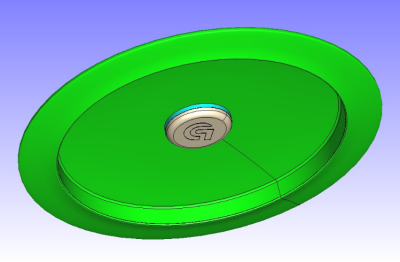 |
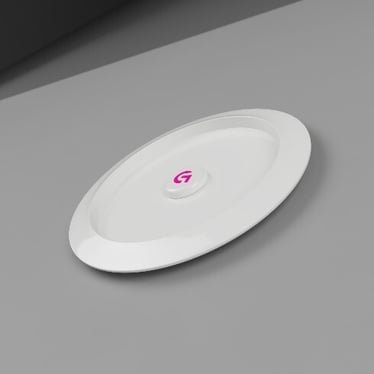
Figure 1. The device model placed on a disk. 3D model (left), simulation model (right)
Every innovation starts with an idea, which gets realized in real life through several phases of development, starting with a concept. The goal for the sensor was to enable GNSS connection, for real-time location tracking, and Bluetooth connection for constant communication with a mobile phone. Another part of “smart” integration was a set of onboard sensors for capturing data on throw speed, launch angle and rotation.
 |
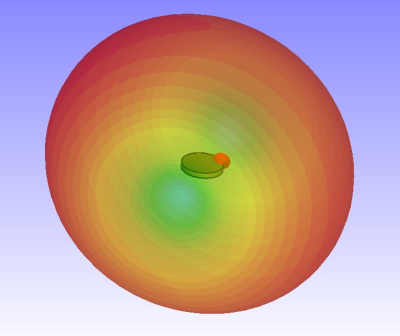 |
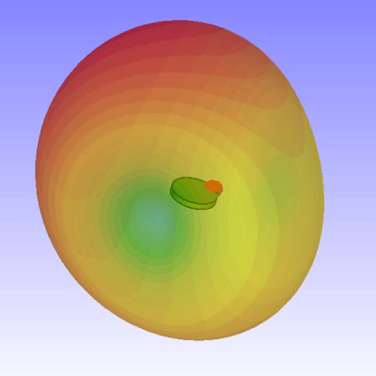
Figure 2. Radiation pattern at 1.575GHz (left) and 2.45GHz (right).
Two antennas were integrated on a PCB with a total diameter of 35mm. Small form-factor of the device makes antenna integration very challenging, as efficiency of an antenna directly depends on the size of the PCB. Radiation patterns of Bluetooth and GPS antennas are shown on Figure 2.
To enable the best user experience while playing Disc Golf, the target for the Bluetooth communication was to achieve at least 100-meter range. The innovative approach to antenna design along with thorough simulation allowed to exceed the 100-meter range requirement.
For such a small light weighted device wireless charging is essential. Coil antenna featured on Figure 3 was designed for this purpose. Another challenge was to optimize the performance of GNSS and Bluetooth antennas with the presence of the coil and ferrite material.
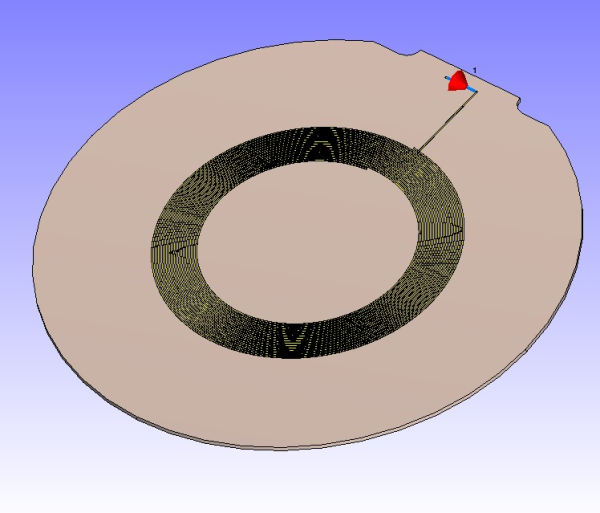
Figure 3. Coil simulation model for wireless charging.
Thorough approach to simulation and consideration of every small detail, allowed minimizing the amount of prototyping rounds, effectively saving budget and engineering resources.
Prototyping and fine-tuning are essential parts of a product development. The disk golf device went through several prototype rounds, ensuring the best possible performance.
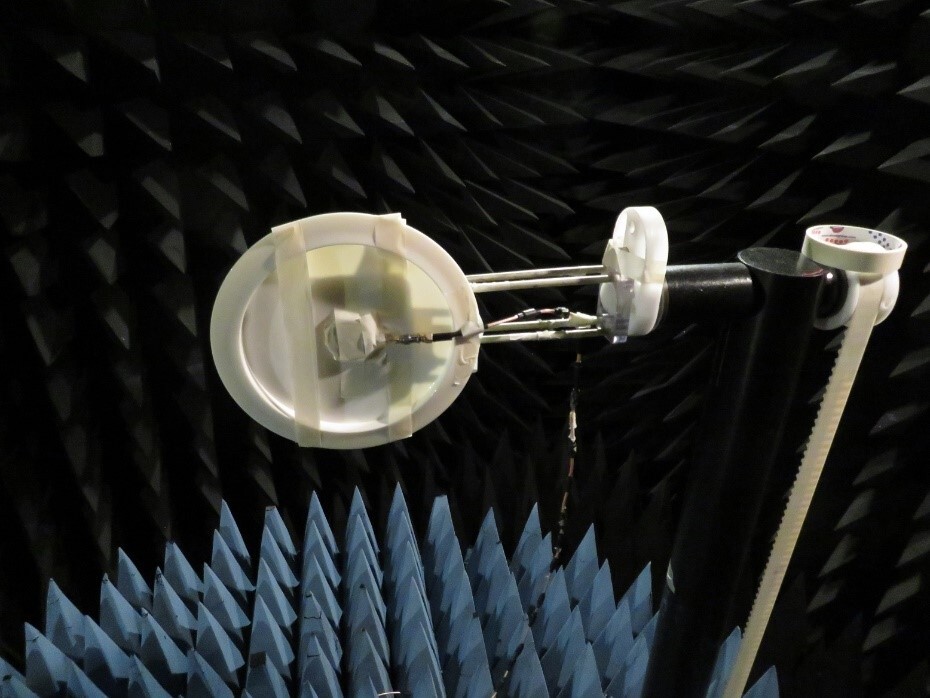
Figure 4. OTA measurement setup.
Fine-tuning consists of optimization of matching networks of the antennas in order to compensate for real life losses and possible manufacturing tolerances.
The prototype was measured in Radientum’s anechoic chamber in full assembly, including the coil and ferrite for wireless charging. As shown on figure 4, the device is attached to frisbee for Over-The-Air measurements. It is very important to fine-tune and measure the prototype in the correct environment, as it will be used in real life.
Integrating wireless connection, GNSS, wireless charging, and advanced sensors gives a significant leap forward in Disk Golf technology. The journey of making a frisbee "smart" has been an exciting challenge for our engineering team. Overcoming the hurdles of small form-factor design, antenna efficiency, minimizing total weight and enable wireless charging, the development process involved thorough simulation, prototyping, and meticulous fine-tuning. The final prototype, measured in a controlled environment, showcases the successful integration of antennas on a small PCB, paving the way for innovative possibilities in the realm of connected sports devices. With each step, the vision of a "smart" frisbee became a reality, delivering enhanced performance and insights to players on the field.
Check out GameProofer's frisbee at the European Open, 20-23rd July 2023.
Disclaimer: The views and opinions expressed in this article are those of the author. It is intended only as a sharing of antenna design knowledge for educational purposes.