



For Bluetooth device designers, a Bluetooth PCB trace antenna, also called a PCB antenna, microstrip antenna, or printed circuit board antenna, is rarely a trivial decision. On paper, this option offers no BOM(bill of material) cost, no connectors, and no external parts.
But in real products, antenna performance is defined by integration, not by the antenna geometry alone.
In this article, we break down when a PCB antenna for Bluetooth is the right choice, when it becomes a risk, and what hardware teams should evaluate early, especially for industrial and B2B products where reliability, range, and predictability matter more than up front cost.
What Do We Mean by a PCB Trace Antenna?
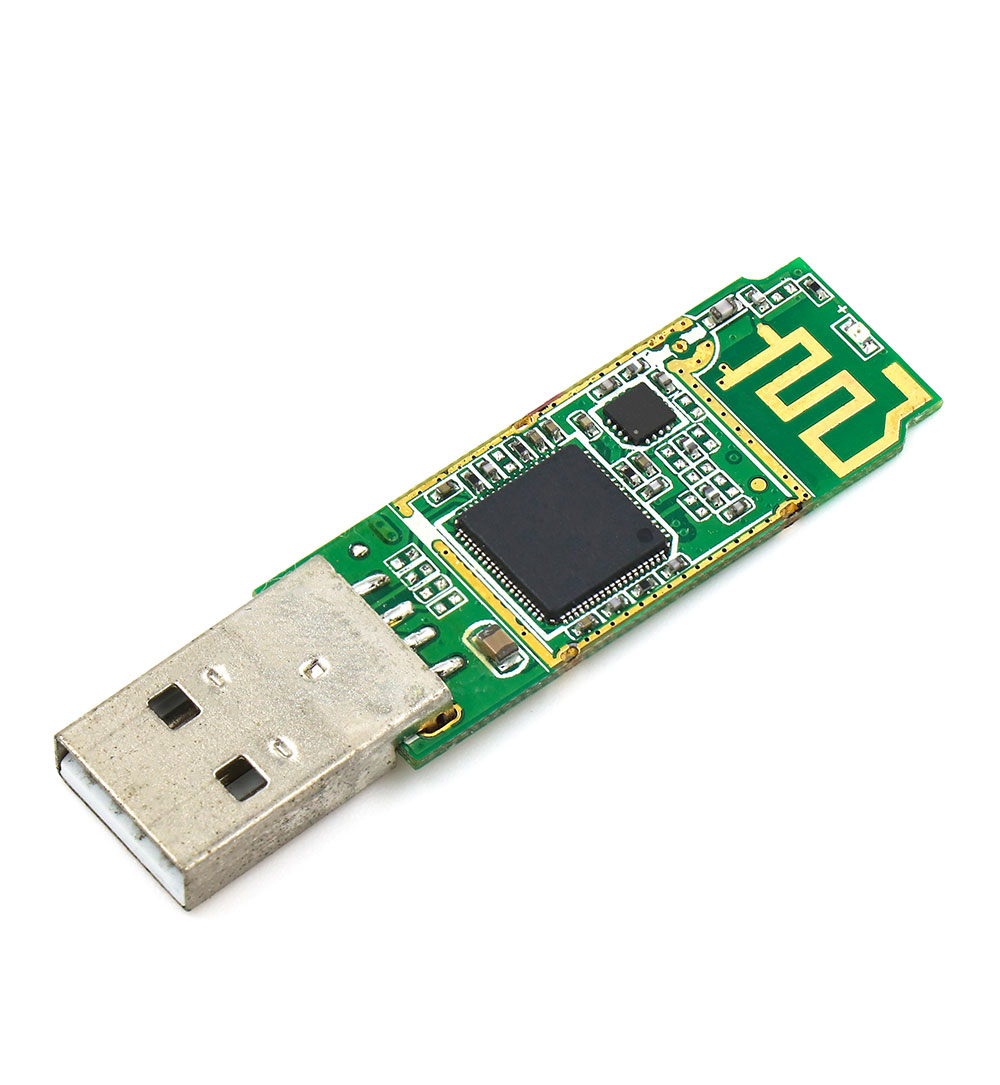
A PCB trace antenna is an antenna formed directly from copper on the PCB, typically as an inverted‑F antenna (IFA), meandered monopole, or loop structure. Unlike chip or external antennas, the PCB itself is the only radiating structure.
Common terms you’ll see used interchangeably include:
- PCB antenna
- PCB trace antenna
- Printed antenna
- Microstrip antenna
- Integrated PCB antenna
From a manufacturing perspective, the appeal is obvious: zero component cost and full control over geometry.
From an RF perspective, it comes with strict constraints.
When a PCB Antenna Is a Good Choice for Bluetooth
A PCB antenna can be an excellent solution when the following conditions are met.
1. The Product Has a Stable and Predictable Mechanical Design
PCB antennas are highly sensitive to their environment. They work best when:
- The enclosure material is known and fixed early
- There are no large metal parts close to the antenna
- Battery size and location are locked early
- Cable routing and displays are well defined
This is often the case in industrial sensors, gateways, and fixed installations, where the form factor doesn’t change between revisions.
If the mechanical design is still evolving, a PCB antenna has to evolve with it.
2. Bluetooth Range Requirements Are Moderate and Well Defined
For many Bluetooth Low Energy (BLE) devices, the goal isn’t maximum range. It’s consistent and predictable coverage.
PCB trace antennas are well suited when:
- Required range is known and validated early
- Link margin is reasonable (not operating at sensitivity limits)
- The device does not rely on extreme orientations or edge‑case scenarios
For professional products, repeatability is often more important than peak performance. For peak performance there are other options available such as flex or LDS.
3. You Control the Entire PCB Stack‑Up and Layout
A PCB antenna is not a drop‑in element. Its performance depends on:
- Ground plane size and shape
- Layer stack‑up and materials
- Nearby components and cut‑outs
- Feed routing and matching network
If your team controls the full PCB layout, and can reserve sufficient keep‑out area, a printed Bluetooth antenna can be tuned very precisely. This is where PCB antennas outperform many commercial off-the-shelf (COTS) alternatives.
4. Total Cost, Reliability, and Manufacturability Matter More Upfront Cost
Because there are no connectors, springs, or cables, on‑board antennas offer:
- Excellent mechanical robustness
- Fewer assembly failure points
- Lower long‑term cost at scale
For industrial and B2B products shipped over many years, this can be a decisive advantage
When a PCB Antenna Becomes the Wrong Choice
Just as important is knowing when not to use a Bluetooth PCB trace antenna.
Compact Devices With Metal or High‑Density Mechanics
In small devices with batteries, displays, or metal housings, PCB antennas don’t have the space once the final mechanics are added.
What looks good on a bare PCB can fail badly in the real product.
This is a common root cause of late‑stage Bluetooth performance issues.
Products Requiring Very High Ranging or Measurement Accuracy
For standard Bluetooth communication, metrics like efficiency and gain are often enough.
But for advanced use cases, such as Bluetooth Channel Sounding, antenna behavior across frequency and angle becomes critical.
Channel Sounding performance depends heavily on antenna group delay stability, not just matching or efficiency. Many PCB antennas or COTS antennas that work “fine” for communication are not suitable once precise ranging is required.
Designs Expecting Easy Antenna Reuse Across Products
A PCB antenna is not portable between products. Even small layout, stackup or enclosure changes can invalidate previous tuning.
If your roadmap includes multiple form factors or variants, a custom PCB antenna may increase long‑term engineering effort unless managed carefully from the start.
PCB Antennas and Bluetooth Channel Sounding: A Special Case
With Bluetooth 6.0 introducing Channel Sounding, antenna design moves from being “good enough” to being fundamental system performance.
Accurate ranging requires:
- Stable phase response
- Low group delay variation
- Controlled radiation nulls across orientations
The Bluetooth Channel Sounding whitepaper shows that bluetooth antennas performing well on bare PCBs can fail completely once integrated into real devices—and that redesigning the antenna specifically for the final product is often required.
This is where early antenna decisions have huge impact.
Practical Takeaway for Hardware Teams
A Bluetooth PCB trace antenna is the right choice when:
- Mechanics are stable and well understood
- Bluetooth performance targets are realistic
- You control the PCB layout and stack‑up
- Reliability and total cost matter more than up-front cost
It becomes risky when:
- The product is very compact or metal‑heavy
- Late mechanical changes are expected
- You need highly accurate ranging or positioning
- The antenna is treated as an afterthought
In other words: Bluetooth PCB antennas reward early, system‑level thinking—and punish late fixes.
Need Help Deciding—or Fixing—Your Antenna?
Radientum helps hardware teams choose, design, and validate the right antenna architecture, from PCB antennas to multi‑antenna systems, based on the actual product environment.
We support companies with:
- Custom PCB antenna design and tuning
- Bluetooth and multi‑radio antenna integration
- Channel Sounding–ready antenna systems
- Simulation‑driven design and real‑world validation
👉 Learn more about Radientum’s antenna design services and how we de‑risk wireless performance early in product development.
Chief Commercial Officer
Mikko Parkkila
Mikko Parkkila is the CCO and co-founder of Radientum. Parkkila started his career as an antenna engineer at Nokia and Microsoft, designing antenna solutions for smartphones, including multiband LTE MIMO antennas. In 2015, Parkkila co-founded Radientum with the aim of providing simulation-driven custom design services for wireless products.
Disclaimer: The views and opinions expressed in this article are those of the author. It is intended only as a sharing of antenna design knowledge for educational purposes.
Leave A Comment